
2 Detectorists Found 2,970 Viking Silver Coins
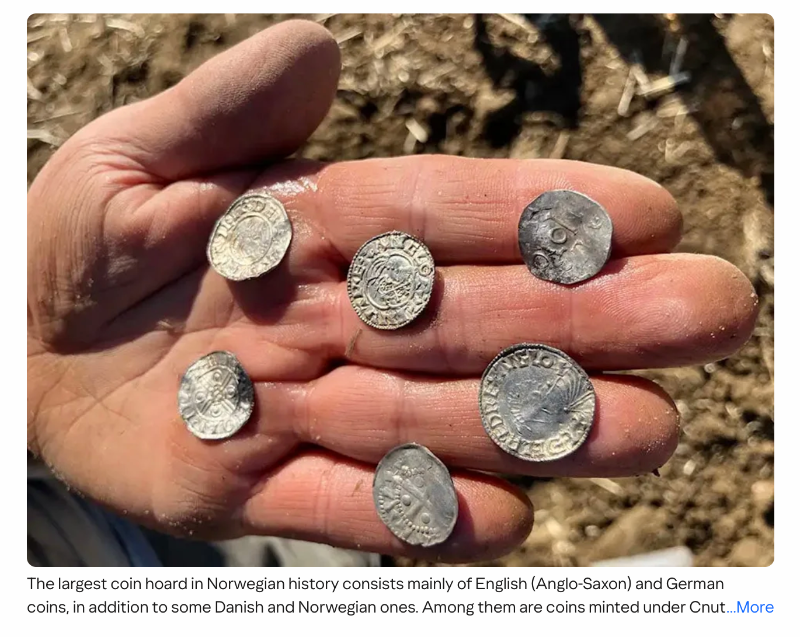
Two Hobbyists in Norway Just Uncovered 2,970 Viking Silver Coins — Here's What the Hoard Reveals About Inland Trade Routes
On a quiet Friday in April 2026, Vegard Sørlie and Rune Sætre were sweeping a farm field near the village of Rena, about 45 miles northeast of Oslo. Nineteen silver coins came up in quick succession. They stopped. They called the authorities. They did the right thing — and then the field kept giving.
By the time archaeologists from the University of Oslo's Museum of Cultural History took over, the count had climbed to roughly 2,970 Viking Age silver coins. On April 29, the museum confirmed it: this is the largest Viking-era coin hoard ever found in Norway.
But the real shock isn't the number. It's the location.
Rena sits deep in the Østerdalen valley — no fjord, no coastline, no obvious trade port. For decades, scholars have assumed Viking wealth concentrated along the water, where longships came and went. A hoard this big, this far inland, quietly rewrites that map. Someone in this valley had reach. The coins are mostly Anglo-Saxon English and German, with a scattering of Danish and Norwegian pieces — silver that traveled hundreds of miles before being buried in a field that nobody, for a thousand years, thought worth a second look.
Why was it buried? Who buried it? And why did they never come back for it?
Conservation is still underway in Oslo. The full breakdown of mint locations hasn't been released. When it is, it will either confirm Rena as a quiet node in a vast Viking trade web — or rewrite the map all over again.